

If you’ve ever looked through a home appraisal, you may have noticed a condition rating listed as C2, C3, C4, or something similar. But what exactly do those ratings mean?
In conventional residential appraisals, properties are assigned a condition rating ranging from C1 to C6. These ratings help describe a home’s overall physical condition, including how well it has been maintained, the amount of wear and tear, and whether repairs or renovations are needed.
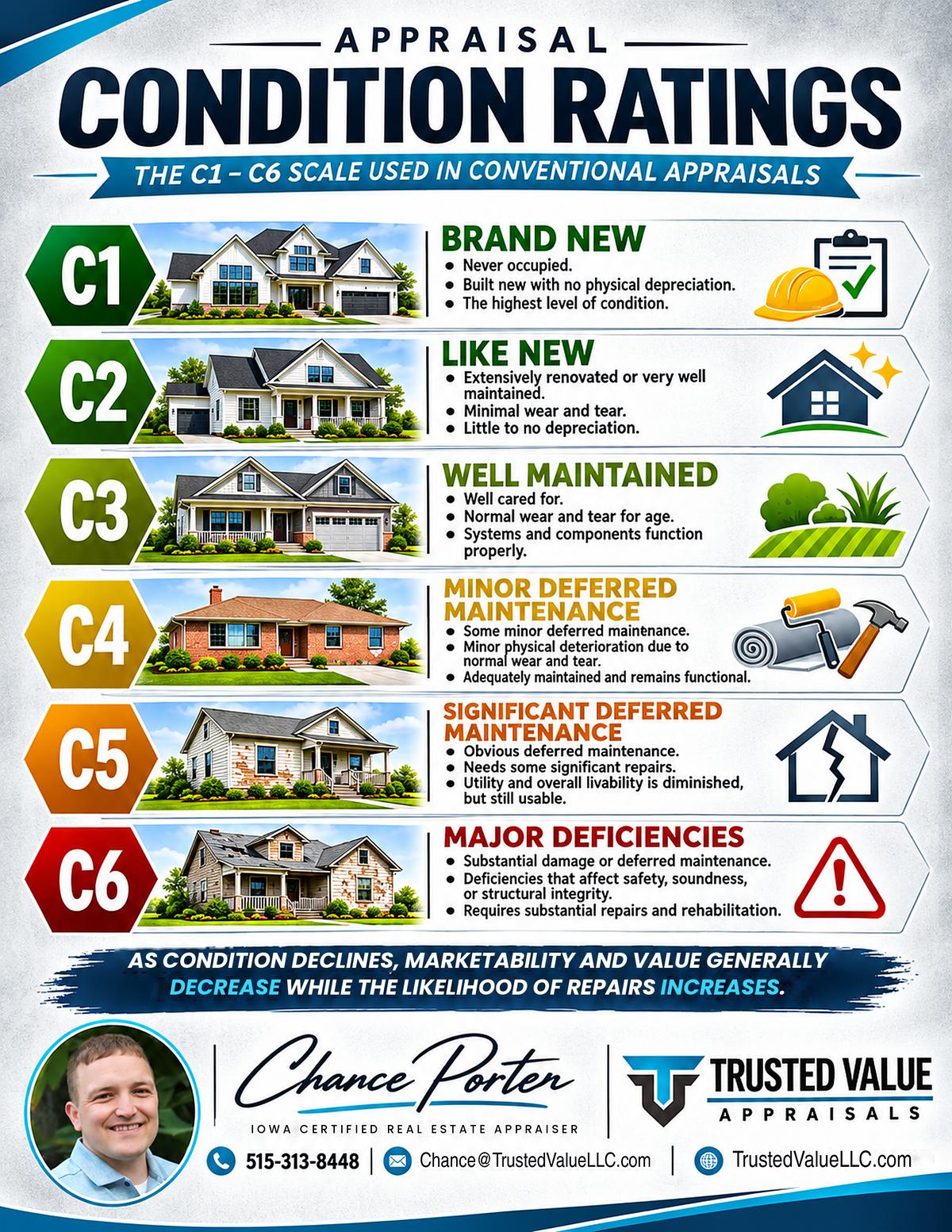
Here’s a simple breakdown
C1: Brand new
This is a newly constructed home that has never been occupied. Everything is new, and there is no physical depreciation. It’s essentially the starting point on the condition scale.
C2: Like new
Think of a nearly new home or an older home that has been completely renovated. Building components and finishes are new or have been updated to current standards. There is little to no physical depreciation and no deferred maintenance.
C3: Well maintained
This is where you’ll find many well-cared-for homes. The property shows some normal wear and tear, but it has been properly maintained. Some components may have been updated or replaced, while others are still original and functioning as intended.
C4: Minor deferred maintenance
A C4 home has some wear and tear and may need minor repairs or cosmetic improvements. Maybe the flooring is worn, the paint needs attention, or a few components are nearing replacement. However, the home is still adequately maintained, and its major systems are functioning properly.
C5: Significant deferred maintenance
Now we’re getting into more noticeable repair needs. A C5 property has obvious deferred maintenance or deterioration that requires significant repairs, rehabilitation, or updating. The home is still usable as a residence, but its overall livability and functionality have been diminished.
C6: Major deficiencies
This rating is reserved for properties with substantial damage or serious deficiencies that affect safety, soundness, or structural integrity. Significant repairs or rehabilitation are necessary, often involving major building components.
Here’s where it gets interesting
Condition isn’t necessarily the same thing as age.
A 50-year-old home that has been meticulously maintained and updated could receive a better condition rating than a 10-year-old home that has been neglected.
And just because a house has granite countertops, new flooring, or trendy finishes doesn’t automatically mean it deserves a C2 rating. Appraisers look at the entire property, not just the features that photograph well.
Why does it matter?
Condition is one of many factors that can influence a property’s market value. Buyers generally recognize the difference between a move-in-ready home and one that comes with a lengthy weekend project list.
However, a lower condition rating doesn’t automatically translate into a specific dollar adjustment. The impact depends on the local market and how buyers react to those differences.
The bottom line? A home’s condition rating tells us much more than whether it’s pretty or outdated. It helps describe how the home has been maintained, how much physical deterioration exists, and what repairs might be needed.
And when it comes to real estate, those differences can certainly matter!